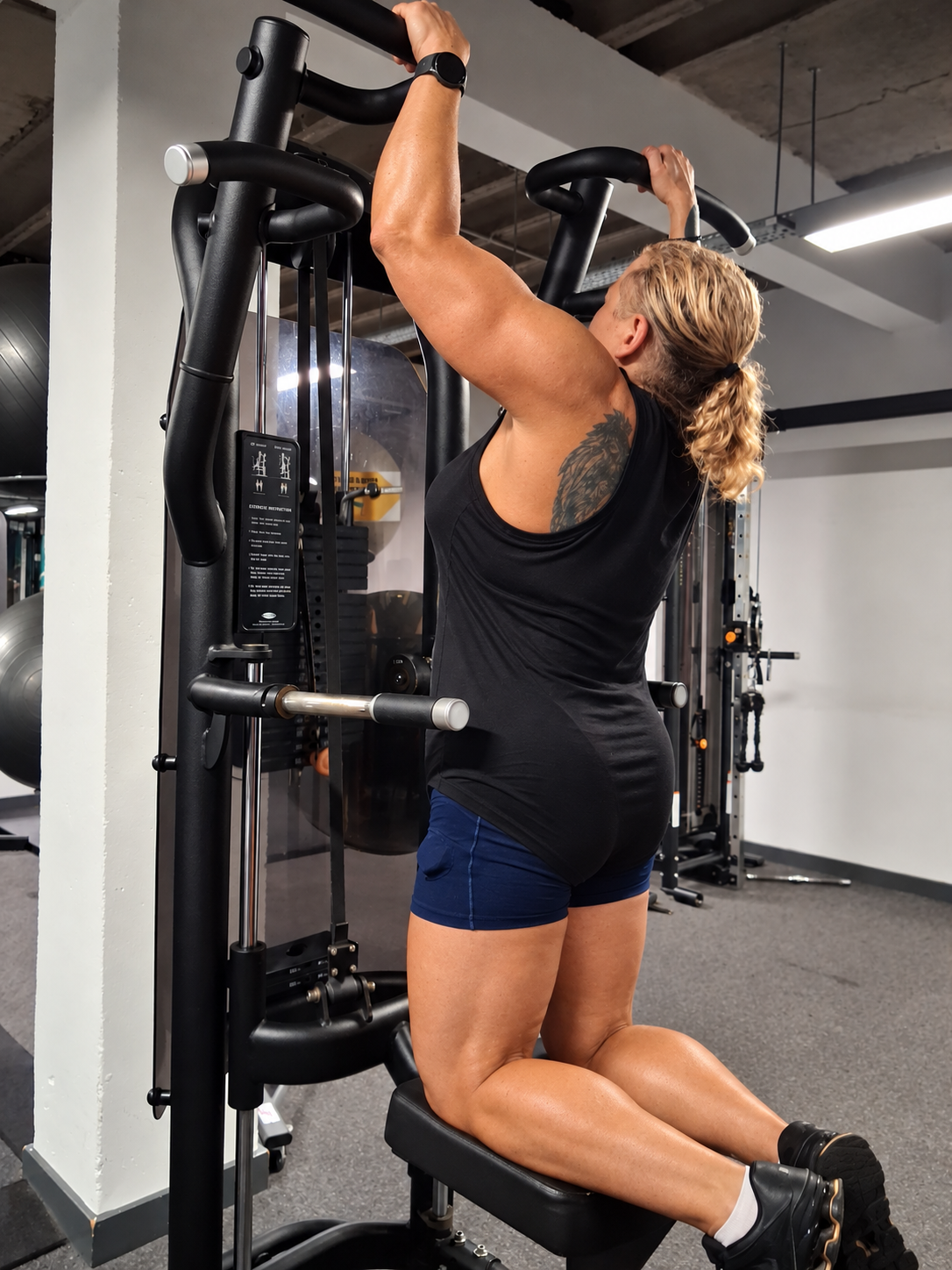
Ageing is inevitable. Becoming weak, losing confidence and accepting declining fitness doesn't have to be.
One of the biggest misconceptions surrounding fitness is that strength training becomes less effective, or even dangerous, as we get older. The science tells a very different story.
Whether you're 40, 50, 60 or beyond, your muscles can still respond to resistance training. You can build strength, develop muscle, improve your body composition and increase your physical capabilities.
At Steph Scully Fitness, I believe that age should never define your potential. Your training should reflect your goals, abilities and individual needs.
01 What Actually Happens to Our Muscles as We Age?
As we get older, changes in muscle mass, strength and recovery can begin to affect how our bodies perform. Age-related muscle loss is commonly referred to as sarcopenia, although the term is particularly used when reduced muscle quantity and strength meet clinical criteria.
Without sufficient physical activity, we may gradually experience:
- Reduced muscle mass and strength.
- Lower muscular power.
- Changes in body composition.
- Reduced balance and mobility.
- Greater difficulty performing everyday physical tasks.
However, these changes are not entirely unavoidable. Research consistently demonstrates that resistance training can increase muscle strength and improve physical function in adults across a wide range of ages.
It continues to adapt when given the right training stimulus, nutrition and opportunity to recover.
02 What Does the Latest Scientific Research Say?
In 2026, the American College of Sports Medicine published a major position stand examining resistance training for muscular strength, hypertrophy and physical performance.
Researchers reviewed evidence from 137 systematic reviews involving more than 30,000 participants. The findings demonstrated that resistance training improves:
- Muscular strength.
- Muscle size, also known as hypertrophy.
- Muscular power and endurance.
- Walking speed.
- Balance.
- Physical function.
The researchers emphasised that consistent, progressive training matters more than following a single rigid workout formula. Importantly, training does not have to be excessively complicated or involve pushing every exercise to complete muscular failure.
The lesson? You do not need to train like a professional athlete to achieve meaningful results. You need a programme that challenges you appropriately and that you can maintain.
03 Why Strength Training Becomes So Valuable After 40
Build and preserve lean muscle
Muscle is essential for much more than appearance. It supports movement, stability, physical performance and the ability to remain active and independent. Progressive resistance training helps your muscles adapt by becoming stronger and, with sufficient training, potentially larger.
Improve body composition
Many people notice changes in body-fat distribution and muscle definition as they reach midlife. Strength training can help preserve or increase lean muscle while supporting fat-loss efforts.
When combined with suitable nutrition and physical activity, this can improve body composition even when changes on the scales are relatively small. Muscle also contributes to resting energy expenditure, although building muscle should not be viewed as a shortcut to dramatically increasing metabolism.
Support stronger bones
Bone health becomes particularly important as we age. Progressive resistance training and appropriate weight-bearing activity place mechanical demands on bones, encouraging adaptations that support skeletal health.
Research in postmenopausal women suggests that resistance training can improve or help maintain bone mineral density, although results vary according to exercise intensity, duration and individual circumstances.
Improve functional strength
Think about everyday activities:
- Carrying heavy shopping.
- Climbing stairs.
- Getting up from the floor.
- Lifting household objects.
- Walking confidently.
- Maintaining balance.
Strength training makes these movements easier by improving the physical capacity required to perform them.
Support metabolic health
Resistance training can also support glucose regulation and metabolic health. Studies involving middle-aged and older adults with type 2 diabetes have demonstrated improvements in muscle strength and measures of blood-glucose control.
Exercise is not a replacement for prescribed medical treatment, but it can be an important component of a healthy lifestyle.
04 Strength Training and Menopause: Why It Matters
For women entering perimenopause or menopause, resistance training can be particularly valuable. Changes in oestrogen levels are associated with alterations in bone health, body-fat distribution and the maintenance of muscle.
Some women also experience disrupted sleep, fatigue and changes in exercise tolerance, making an individual approach to programming important.
The National Institute for Health and Care Excellence (NICE) specifically advises that people experiencing menopause should understand the importance of maintaining muscle mass and strength through physical activity.
A properly designed strength programme can help women:
- Maintain and develop muscle strength.
- Support bone health.
- Improve physical capability.
- Manage body composition alongside nutrition.
- Build confidence in their changing bodies.
05 How Often Should You Strength Train After 40?
The UK Chief Medical Officers recommend muscle-strengthening activity involving the major muscle groups on at least two days per week. For someone beginning resistance training, two or three sessions per week can provide an excellent foundation.
A typical starting point might involve:
Frequency2–3 sessions per week.
Exercises5–7 movements covering major muscle groups.
Sets1–3 working sets per exercise, progressing as appropriate.
RepetitionsOften 8–12 reps, though other ranges can build muscle and strength.
IntensityUse a challenging weight with controlled technique, initially finishing with around 2–3 reps in reserve.
ProgressionGradually increase resistance, repetitions or volume as your ability develops.
The best programme is not necessarily the one containing the most exercises. It's the one that creates enough stimulus for improvement without exceeding your ability to recover.
06 Five Excellent Strength Exercises to Start With
Develops lower-body strength, particularly the quadriceps and glutes.
Strengthens the hamstrings and glutes while developing hip-hinge control.
Works the chest, shoulders and triceps and develops upper-body pushing strength.
Strengthens the back and supports upper-body pulling movements.
Targets the upper back and contributes to balanced upper-body strength.
These movements can be performed using gym machines, free weights or suitable alternatives. Not every exercise is appropriate for every person. Movement selection should account for mobility, injury history, confidence and individual needs.
07 Progressive Overload: The Key to Continued Results
One of the most important principles in resistance training is progressive overload. This means gradually increasing the demands placed on your muscles as they become stronger.
For example, imagine you begin a leg press programme using a weight you can lift for eight controlled repetitions. Over several sessions, you may progress to ten repetitions, then twelve.
Once you can comfortably complete your target repetitions with good technique and the intended effort level, you may be ready to increase the weight slightly. This process encourages your body to continue adapting.
You do not need to increase weight every workout, and progress will not always be linear. Consistency over months is far more important than chasing a personal best every week.
08 Nutrition: Building Muscle Requires More Than Exercise
Training provides the stimulus for muscle growth, but nutrition helps support the adaptation process. Protein is particularly important because it provides amino acids used in muscle repair and growth.
A major meta-analysis published in the British Journal of Sports Medicine found that protein supplementation can enhance resistance-training adaptations, with average benefits tending to plateau at a total protein intake of approximately 1.6 grams per kilogram of body weight per day.
Individual requirements vary. For an otherwise healthy adult who trains regularly, a protein intake around 1.4–1.6 g/kg daily can be a practical starting range, with higher or lower targets appropriate in some circumstances.
Other nutritional priorities include:
- Eating sufficient calories to support your goals.
- Including carbohydrates for energy and training performance.
- Consuming healthy dietary fats.
- Maintaining adequate hydration.
- Choosing varied, nutrient-rich foods.
People with kidney disease or other conditions affecting nutritional requirements should seek individual medical or dietetic advice before significantly increasing protein intake.
09 Recovery Is Part of Building Strength
As we grow older, recovery deserves attention, but age alone does not dictate how much rest someone needs. Training experience, sleep quality, total exercise volume, stress and health conditions all influence recovery.
A sustainable programme should include adequate sleep, sensible training progression, rest between demanding sessions and adjustments when fatigue builds.
Persistent pain, unusual breathlessness, dizziness or worsening symptoms should not be dismissed as normal exercise fatigue.
10 Is It Too Late to Start Strength Training at 50 or 60?
Absolutely not. Research supports the benefits of resistance training in older adults, including improvements in muscular strength and physical function.
Even people who have never previously lifted weights can make meaningful progress with an appropriately designed programme.
You do not need to be fit before entering a gym. You do not need to lift heavy weights on your first day. And you certainly do not need to look a particular way to deserve the benefits of exercise.
Start at your current level, build confidence, learn the movements and progress at a pace that suits your body.
If you have an existing medical condition, osteoporosis, significant cardiovascular concerns or persistent pain, obtain appropriate medical advice and ensure your programme is adapted to your needs.
11 My Philosophy at Steph Scully Fitness
I believe strength training is about much more than changing the way your body looks. It's about becoming more capable, more confident and more resilient.
It's about being able to move well, feel stronger, maintain independence and enjoy life for as long as possible.
Whether your goal is to build muscle, lose body fat, regain confidence or simply become stronger than you were yesterday, there is always somewhere positive to begin.
Scientific References
- Currier, B. S. et al. (2026). ACSM Position Stand: Resistance Training Prescription for Muscle Function, Hypertrophy, and Physical Performance in Healthy Adults.
- UK Chief Medical Officers. Physical Activity Guidelines.
- Morton, R. W. et al. (2018). Protein supplementation and resistance training-induced gains in muscle mass and strength. British Journal of Sports Medicine.
- Zhao, F. et al. (2025). Resistance training parameters for improving bone mineral density in postmenopausal women. Journal of Orthopaedic Surgery and Research.
- NICE. Menopause: Identification and Management (NG23).
- González-Gálvez, N. et al. (2024). Resistance training effects on healthy postmenopausal women. Climacteric.
This article provides general fitness education and is not a substitute for individual medical assessment or treatment.